Fridays with Manny

image

HOW TO FEEL GOOD

– How are you?
– Always Good! – This is almost always my answer to the question. It has become my trademark. Somebody once suggested that saying “good” all the time might be limiting, so I added something to my response: “I’m always good, and tomorrow I’m going to be even better!”

What does it mean? It means that I try to live according to my outlook on life: whatever happens, I look for the good in it. This is how I choose to live. Of course, not everyone can adopt this philosophy. We all have different circumstances, different challenges, and different views of life. We are surrounded by distractions, and sometimes it is difficult to avoid being affected by what happens around us. But over the years, I have learned an important lesson. Recently, my six-year-old granddaughter reminded me of it in a way I will never forget.
I Want to Feel Good!

Last April, my granddaughter visited us from Portland, Oregon, where she lives with her parents, my daughter and her husband. We took the family to some of our favorite places, where we often spend time walking with Max, our dog. One of those places is Ocean Beach. My granddaughter loved it! She ran into the water, splashed around played in the sand, and had a wonderful time. Naturally, she got wet and dirty.

Her mother became upset and raised her voice, wanting her to change her skirt. But my granddaughter refused. She loved that skirt! And then she said something that stayed with me: “I love this skirt. I want to feel good!”

She kept repeating: “I want to feel good! I want to feel good!” Those words got stuck in my mind. There was something so simple and honest about what she was saying. She wanted to enjoy herself. She wanted to feel good. And she didn’t want to give up something she loved just because the situation wasn’t perfect.

Her words reminded me of my own philosophy. But they also inspired me to put that philosophy into a simple mantra. I even recorded a YouTube video in which I share this idea. The original version went like this:

  • If, whatever it is, doesn’t make me feel good, I’m not interested.
  • If, whatever it is, doesn’t help my loved ones feel good, I’m not interested.
  • And if I cannot do anything about it, I’m not interested.

The idea is simple: why spend our precious time and energy on things that make us feel bad, especially when there’s nothing we can do to change them?
What Does Feeling Good Mean to Me?

I feel good most of the time. Of course, I don’t feel good every minute of every day. Nobody does. But feeling good doesn’t mean being happy all the time or pretending that problems don’t exist. It means appreciating the things that make life worthwhile.

When I help a client close a mortgage loan, I feel good. When I receive the commission for that loan, I feel good, too. Why? Because that money allows me to pay our employees, and that makes me feel good. When my wife and I travel together, I feel good. This December, we are planning a ten-day trip to Kauai, and I already feel good about it.

There are so many things in life that can make us feel good. We just have to recognize them and appreciate them.

I have also learned to pay attention to what I allow into my life. I don’t watch television, and I don’t read the daily news. I have found that much of what I would encounter there doesn’t make me feel good. Instead, it can create unnecessary worry, frustration, or negativity and take time away from the things I enjoy.

This is my personal choice. I would rather spend that time walking with Max, being with my wife, helping my clients, learning something new, working on my next book, or simply enjoying the world around me.

Life is too precious to spend all our time worrying about things we cannot change.

A More Positive Mantra

Recently, I started thinking about my original mantra.

Although it expresses what I believe, I wondered whether it sounded too negative. It focused on what I wasn’t interested in rather than on what I wanted to embrace. So, I decided to turn it around.

Here is my new version:

  • If it makes me feel good, I’m interested.
  • If it makes my loved ones feel good, I’m interested.
  • If I can do something to make myself or someone I love feel good, I’m interested.

And if I cannot change it, I’m not interested. Otherwise, I don’t want to spend my time and energy on it. I like this version better because it focuses on the positive. It encourages me to look for opportunities to feel good and to help the people I love feel good, too. And if there is a problem, I cannot do anything about, I try not to let it take over my life.

Of course, there are responsibilities we cannot ignore and problems we must face. Feeling good doesn’t mean running away from them. Sometimes, taking care of a difficult situation is precisely what makes us feel good afterward.

If you would like to start feeling good, order three of my latest books on Amazon.

Thank you!
image

The Good News with Manny

A SIGH OF RELIEF
Part Two

Last week, I shared some of the challenges I faced while helping a client obtain a mortgage so she could pay her sister her share of their father’s inheritance. We had already overcome several obstacles, but the real kicker was still ahead.

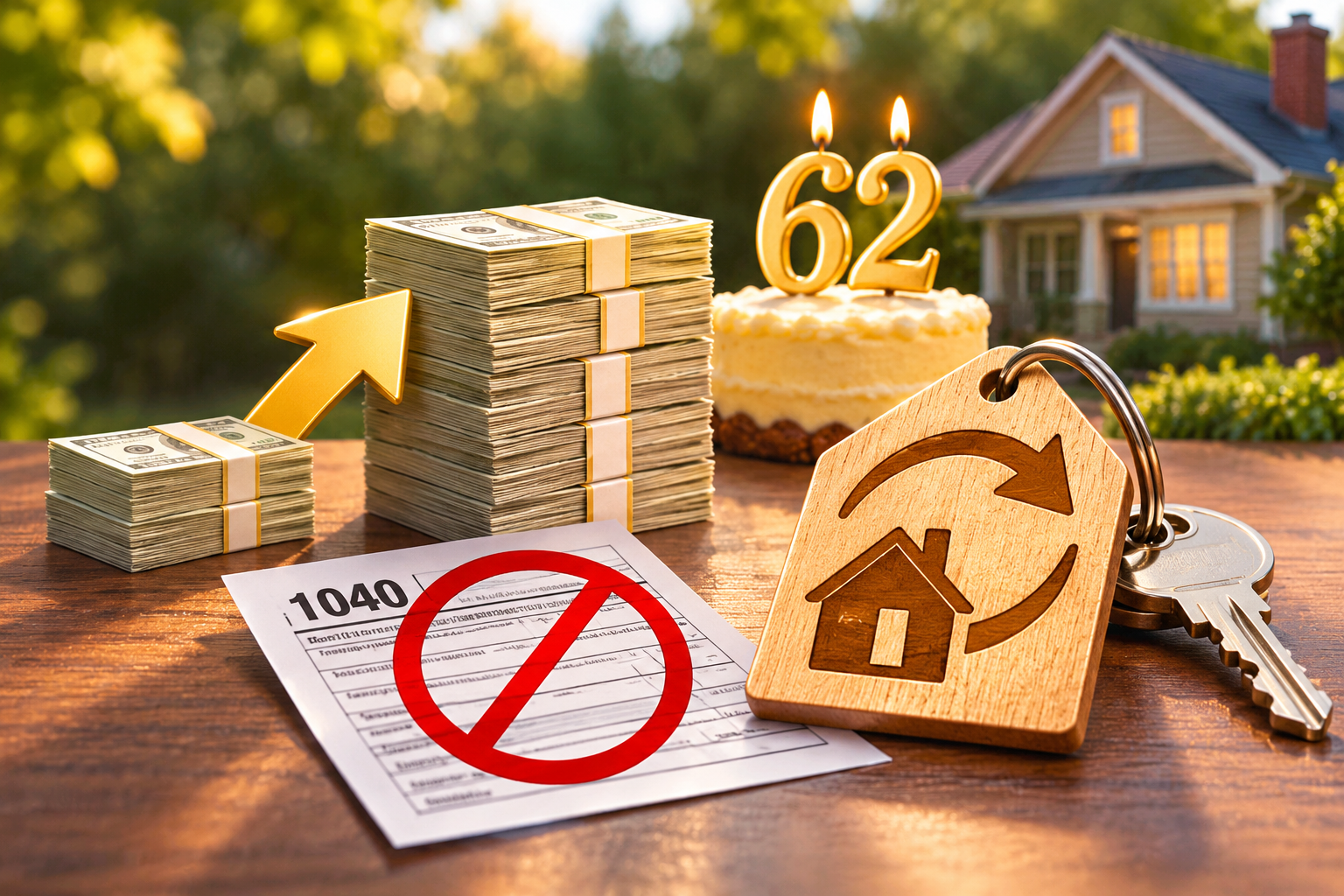
After finding a way to obtain a smaller loan, I had to find a way to get my client a much larger amount of money. We needed a loan program that would not require her to provide tax returns. Fortunately, my client had just turned 62. That opened another possibility: a reverse mortgage.

Reverse mortgages are available to eligible borrowers starting at age 55 under some programs, although the age requirements depend on the type of loan. With reverse mortgages, the older the borrower, the more money may be available, subject to the property’s value and other requirements.

Because the property had a high value, we needed two appraisal reports. The results were surprising. One appraisal showed a much higher value than the other. Unfortunately, the lender had to use the lower of the two values. Fortunately, even the lower value gave us enough equity to obtain the money my client needed. I thought we were finally getting close.

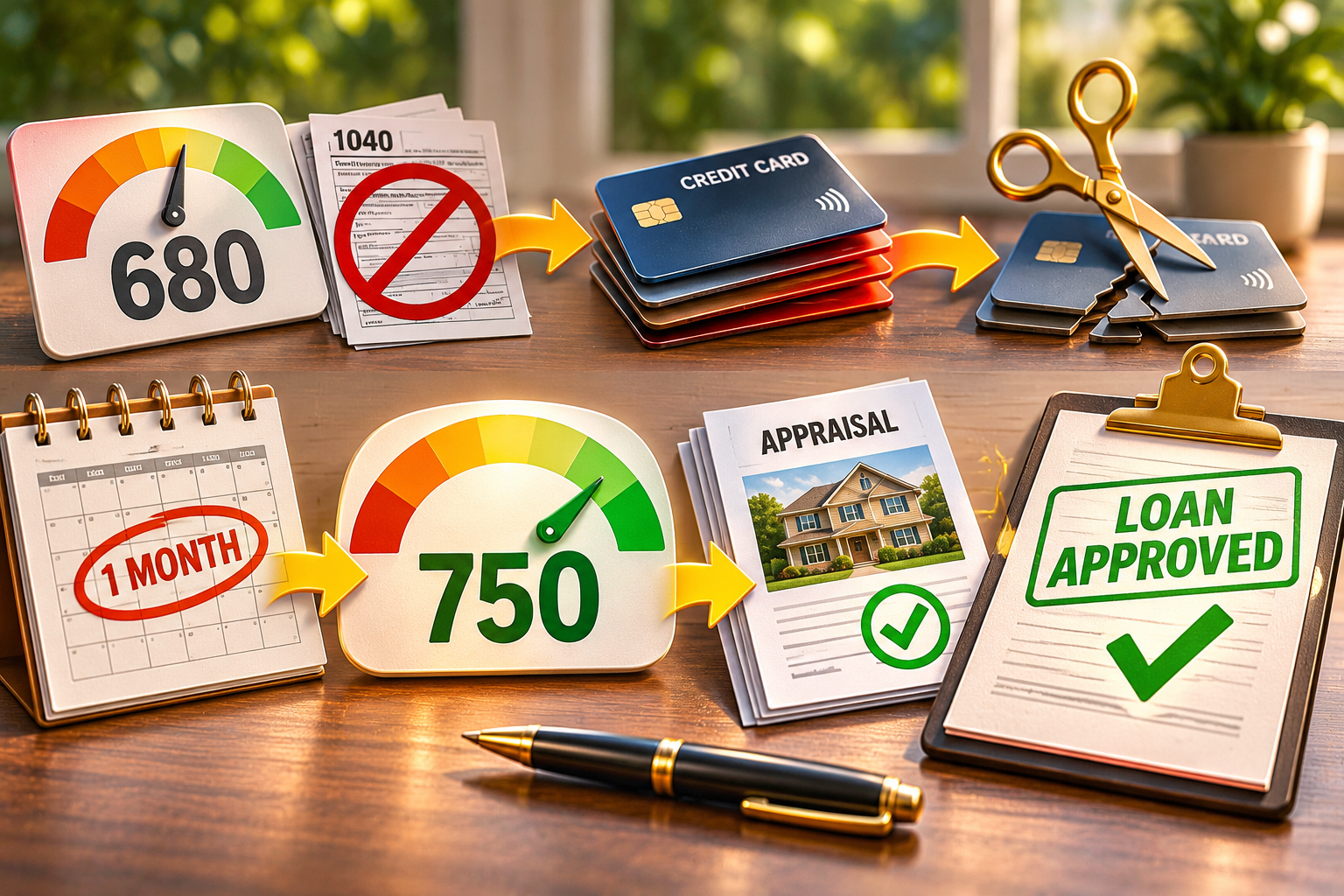
Then another unexpected condition appeared. My client’s credit score was around 680, and the lender required tax returns. But my client hadn’t filed them. I had never encountered this particular situation before. So, I decided to submit the loan to another lender.

There is a saying often attributed to Albert Einstein that the definition of insanity is doing the same thing over and over again and expecting different results. Perhaps I was doing exactly that. But the new lender looked at the situation differently.

The lender told me that if we could get my client’s credit score to 720 or higher, tax returns would not be required under that particular loan program. Now we had another possible solution. I suggested that my client use some of the money she had received from the first refinancing to pay off her credit card balances. She did.

About a month later, we checked her credit again. Her score had increased to 750. That changed everything. We were able to transfer the appraisal reports to the new lender, and the loan was approved.

Of course, we still had some title-related issues to resolve, and we were running out of time. But we kept going. Finally, last week, I received my commission check. My wife, Elpha, and I have worked together for more than 40 years. When she saw the check, she said something that made me smile: “Now you can say that the deal is closed.” And she was right. What a relief!

Looking back, this double transaction taught me something important. When you begin working on a complicated mortgage, you cannot predict every obstacle you will encounter. Sometimes, you don’t discover a problem until you have completed several steps.

And sometimes, a solution that seems impossible at first becomes possible when you look at the situation from a different angle.

  • You have to be patient.
  • You have to know your options.
  • And you have to be willing to keep looking when the first answer is no.

This is true in the mortgage business, and I believe it is true in life. After more than 40 years in the mortgage business, I still learn something from every complicated transaction. And that is one reason I enjoy what I do.

There are many people out there who are struggling with financial problems and don’t know where to turn. Some may need help with a mortgage. Others may need someone to explain their options and help them understand what is possible.

So please don’t be shy about reaching out to people who might need help. Sometimes, all it takes is a conversation to discover a possibility they didn’t know existed. Where there is a will, there is a way.

Thank you for following my story!

Manny Kagan
Mortgage Broker | 40+ Years of Experience
(415) 225-7920

Fridays with Manny

image

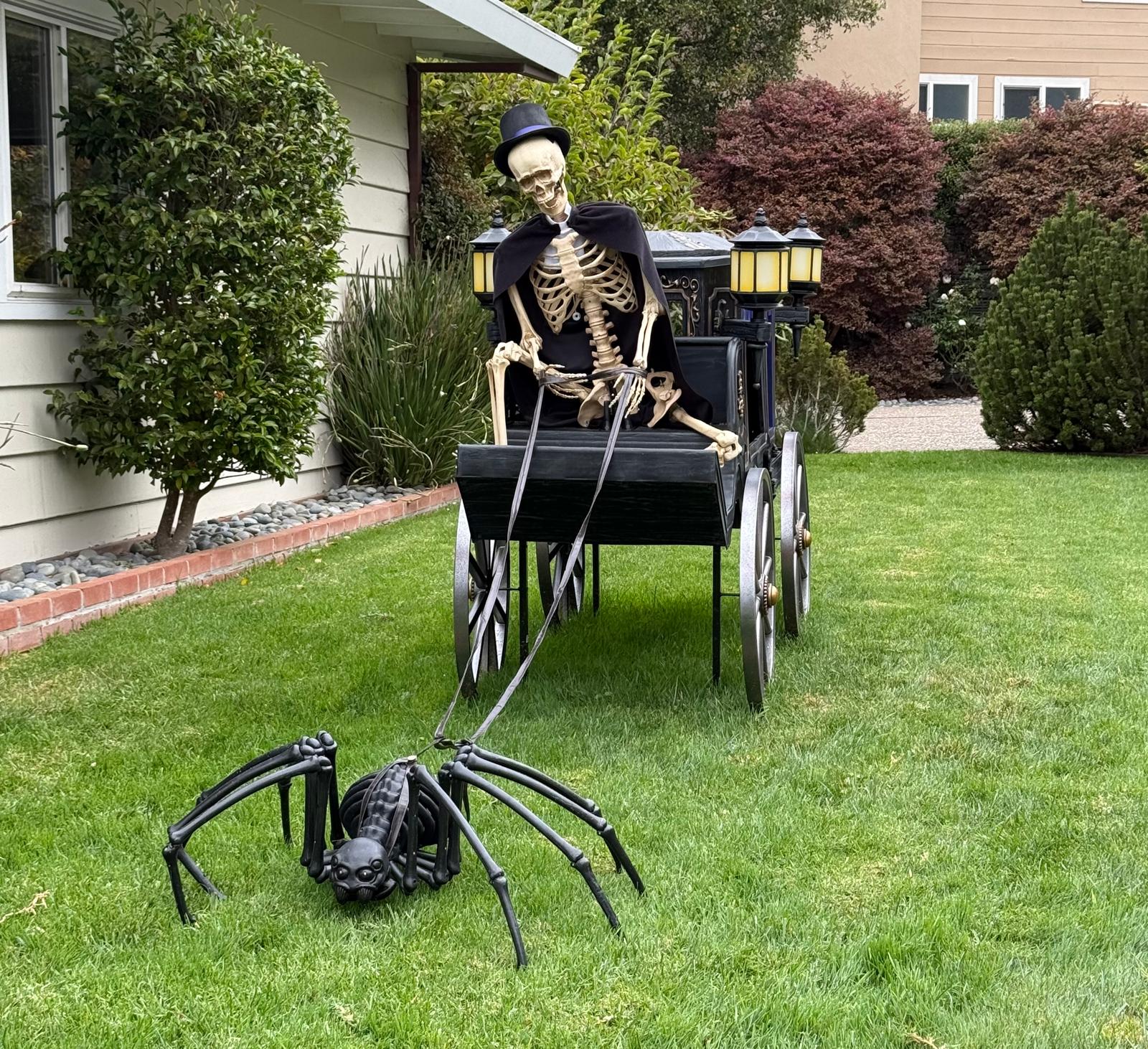
WHY SKELETONS ON HALLOWEEN?

The ancient Celtic tradition

Halloween has roots in the ancient Celtic festival of Samhain, celebrated around the end of October. People believed that during this time, the boundary between the world of the living and the world of the dead became less distinct. Fire, costumes, and rituals were associated with protecting people from harmful spirits.

The Christian tradition of remembering the dead

November 1 became All Saints’ Day in the Christian calendar, followed by All Souls’ Day on November 2 in many Christian traditions. The preceding evening became known as All Hallows’ Eve, eventually shortened to Halloween.

Skeletons and skulls became symbols associated with death and the temporary nature of human life. In medieval Europe, artistic images called danse macabre, or the Dance of Death, reminded people that death comes to everyone, regardless of wealth or social position.

Why skeletons became popular decorations?

Over time, Halloween developed into a holiday of costumes, frightening characters, and playful encounters with the supernatural. Skeletons became ideal decorations because they are instantly recognizable, easy to manufacture, and can be arranged in funny or frightening scenes.

Today, homeowners place skeletons on their porches, hang them from trees, or arrange them as if they were having a party. What once symbolized death can now be a source of humor and creativity.

And what does it mean today?

For most people, skeletons are no longer a serious reminder of death or a representation of ancient beliefs. They are simply part of the fun of Halloween.

There is an interesting contrast here: skeletons represent the end of life, yet people use them to celebrate, laugh, and bring their neighborhoods together.

Perhaps that is one of the reasons Halloween decorations have become so creative. People can take something that might otherwise frighten them and turn it into something amusing.

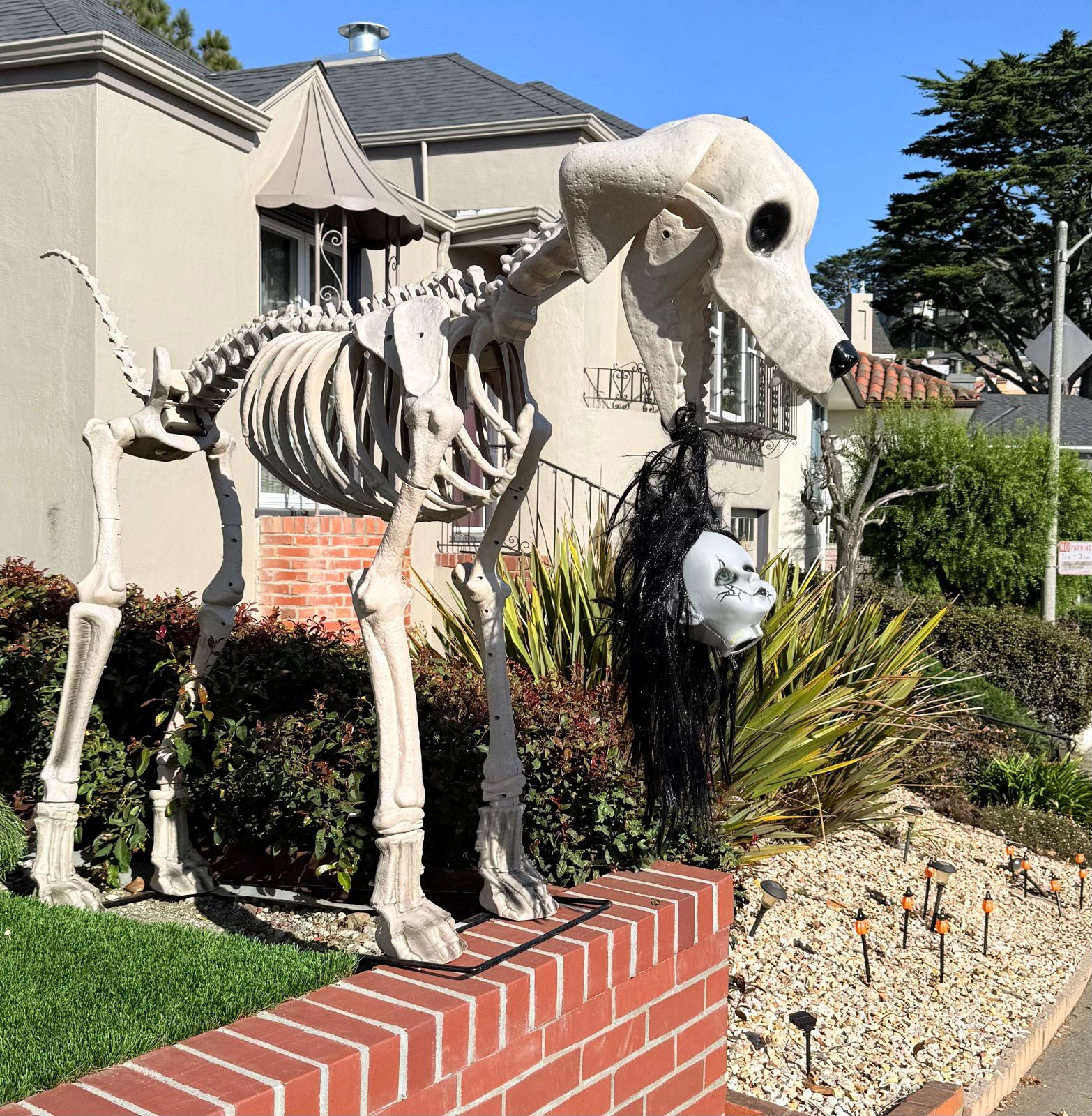
And as you have observed in your neighborhood, some homeowners turn their front yards into elaborate scenes, using skeletons as characters in their own little stories, as you can see in the three images above.

Enjoy and share!

image